
Industries / Software teams
Time tracking for software teams
Your team requests time off and sees their balances, and a manager approves in one place. You can track hours too, but you don’t have to. TimeOff Manager is not a code repository or an issue tracker.
- 14-day trial
- From $15/mo
- Live demo
From $15/mo billed annually. Starter $15/mo · Growth $25/mo · Scale $49.99/mo.
How a software team uses it
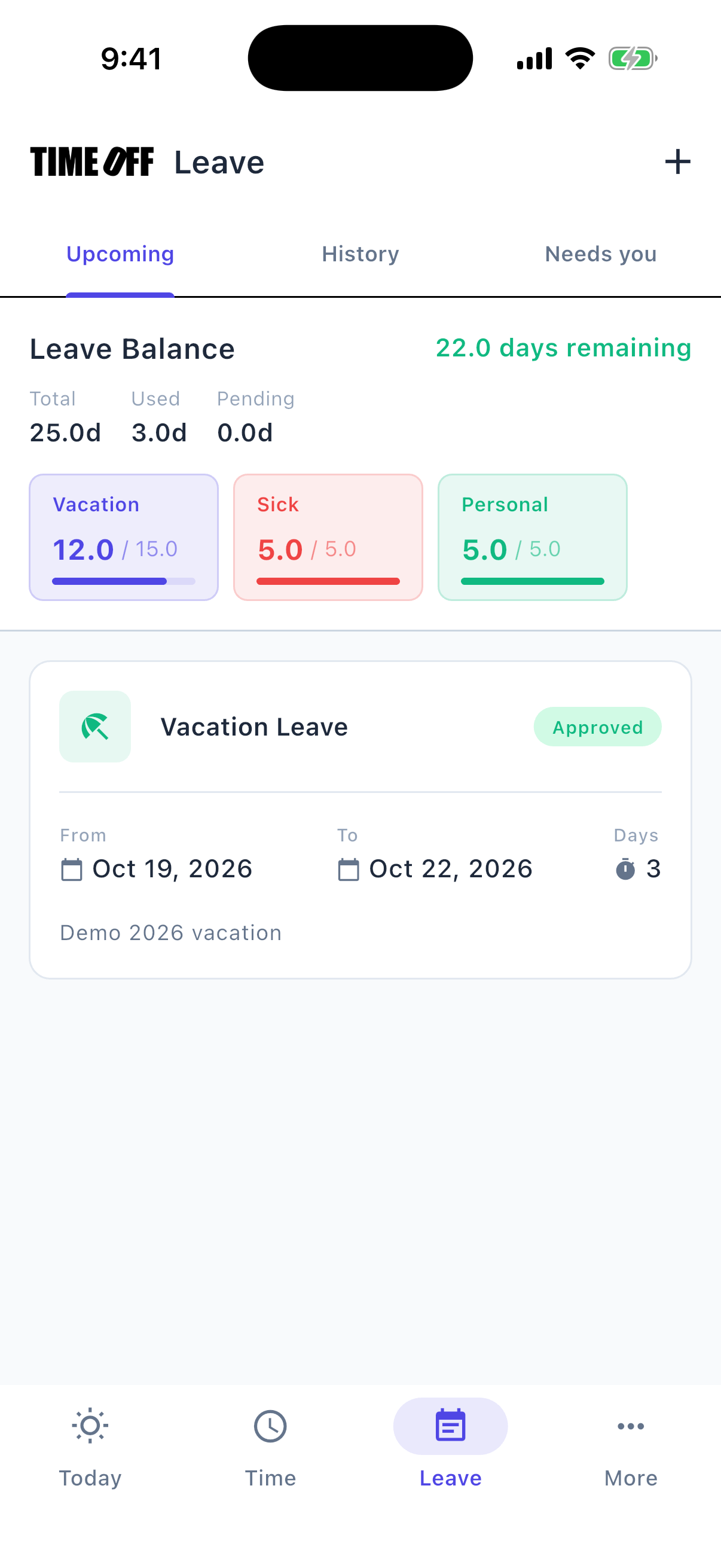
Requesting time off from the phone
Ask for a week off in the app
A request for a week off sits in Slack until someone notices the empty seat.
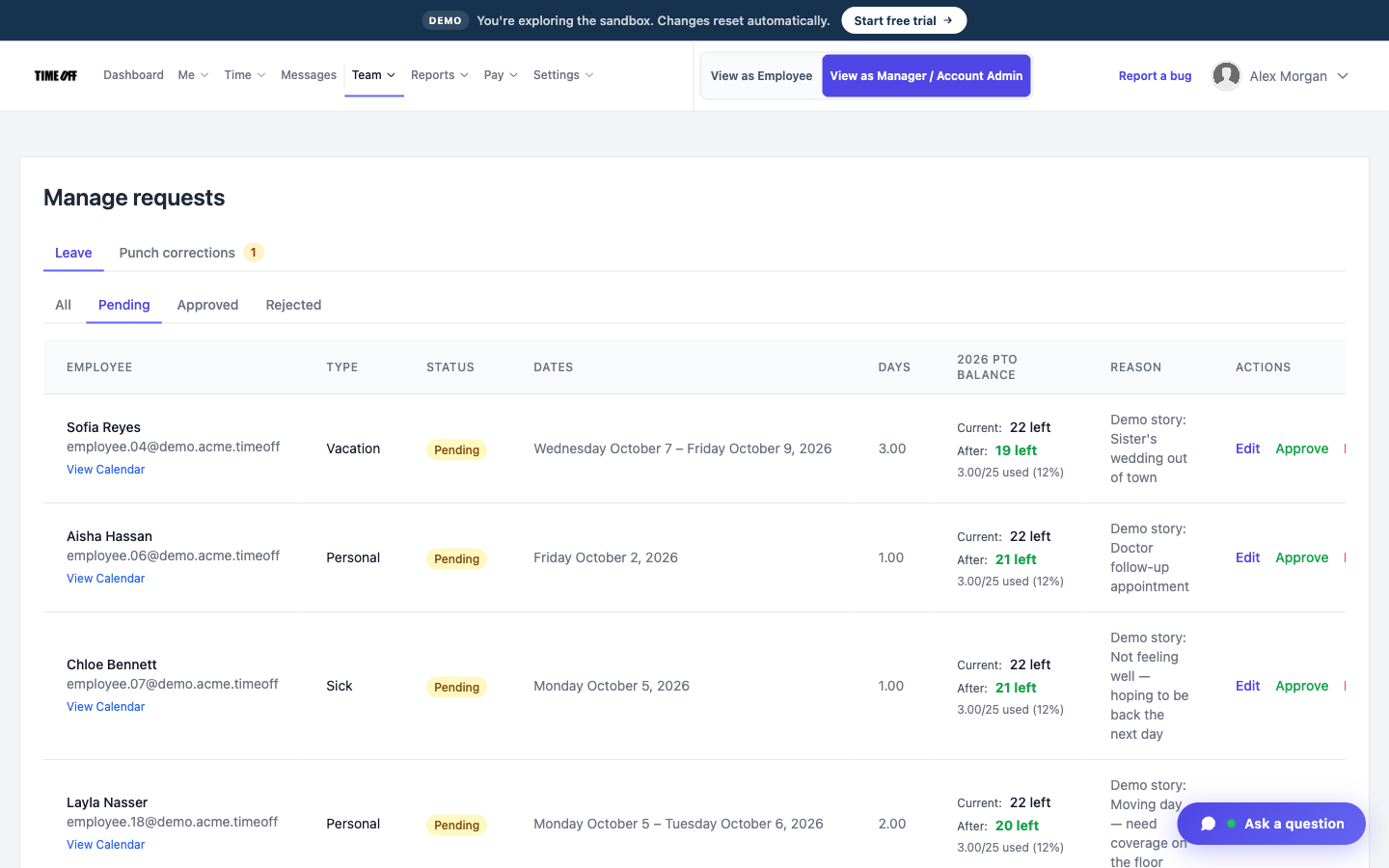
The developer requests the week in TimeOff Manager and sees how many days they have left. The request goes to the manager’s approval list.
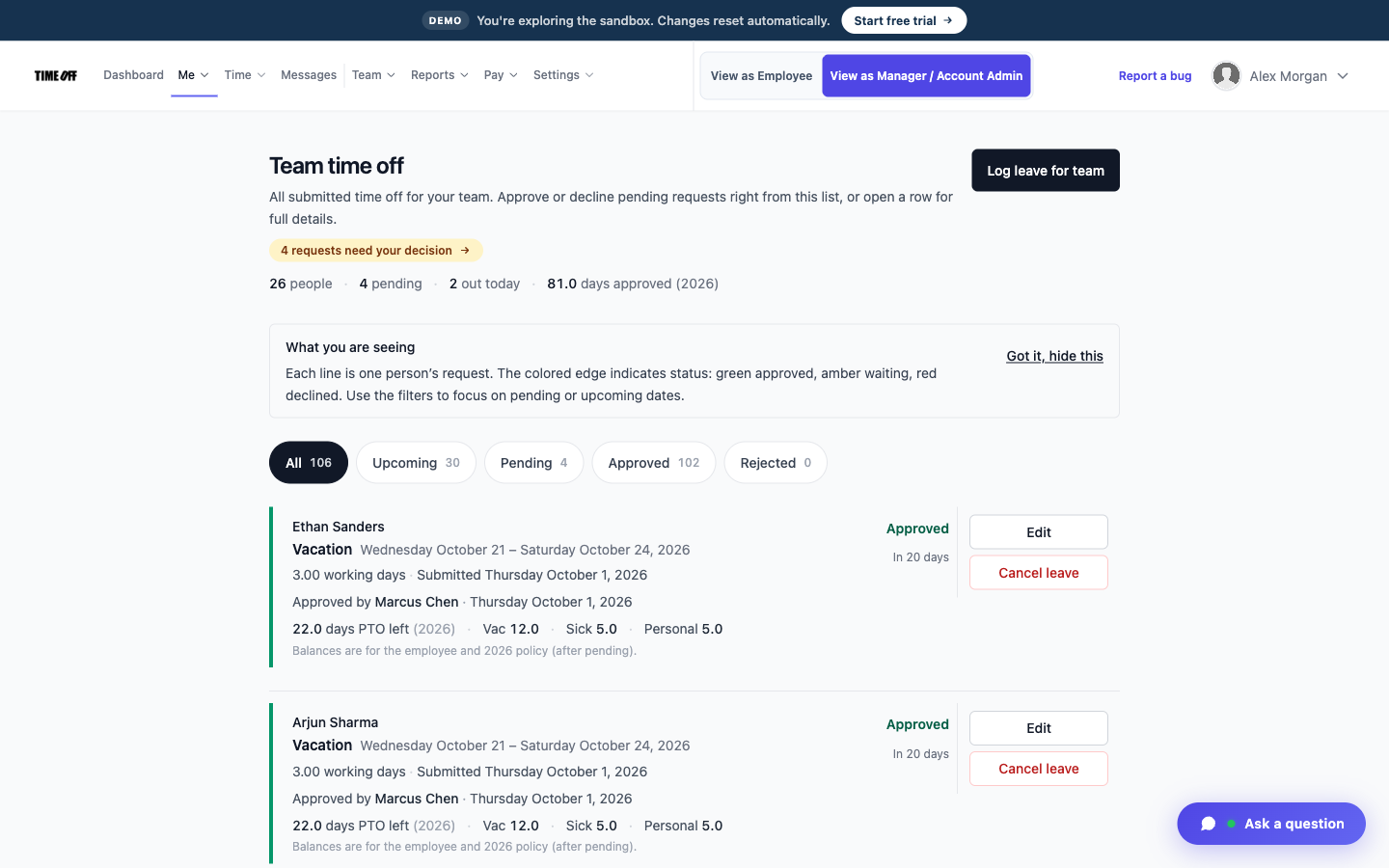
Every request and its status
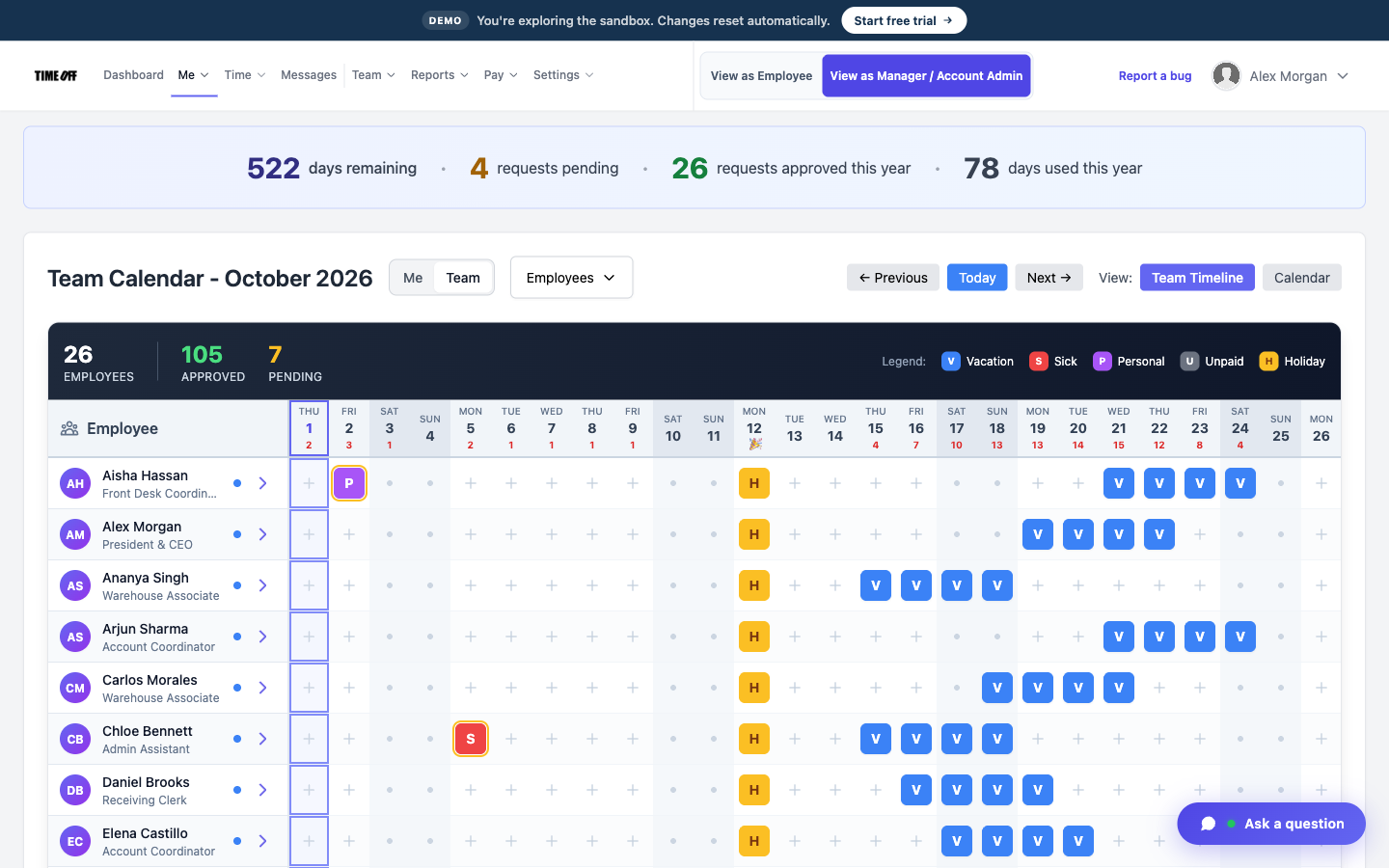
The whole team can see who is out
Two people book the same week off without knowing it.
Approved time off shows on one team calendar that everyone can see.
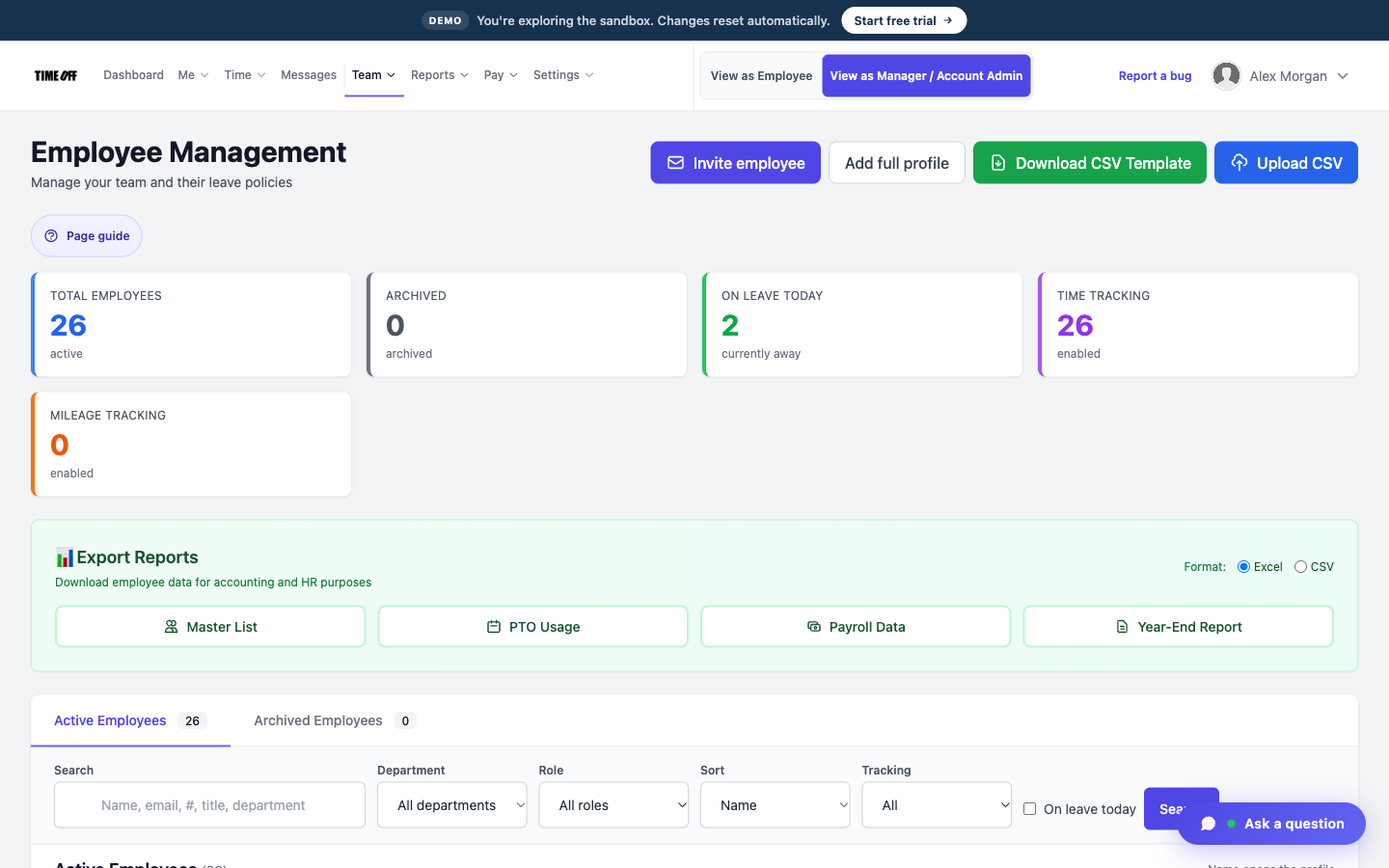
Everyone on the team
Leave balances follow your policy
Unlimited time off, days that build up over time, or a fixed bank of days only works if the policy is actually set up.
You choose the leave types and how days build up (accrue). Each person’s balance follows the policy you set.
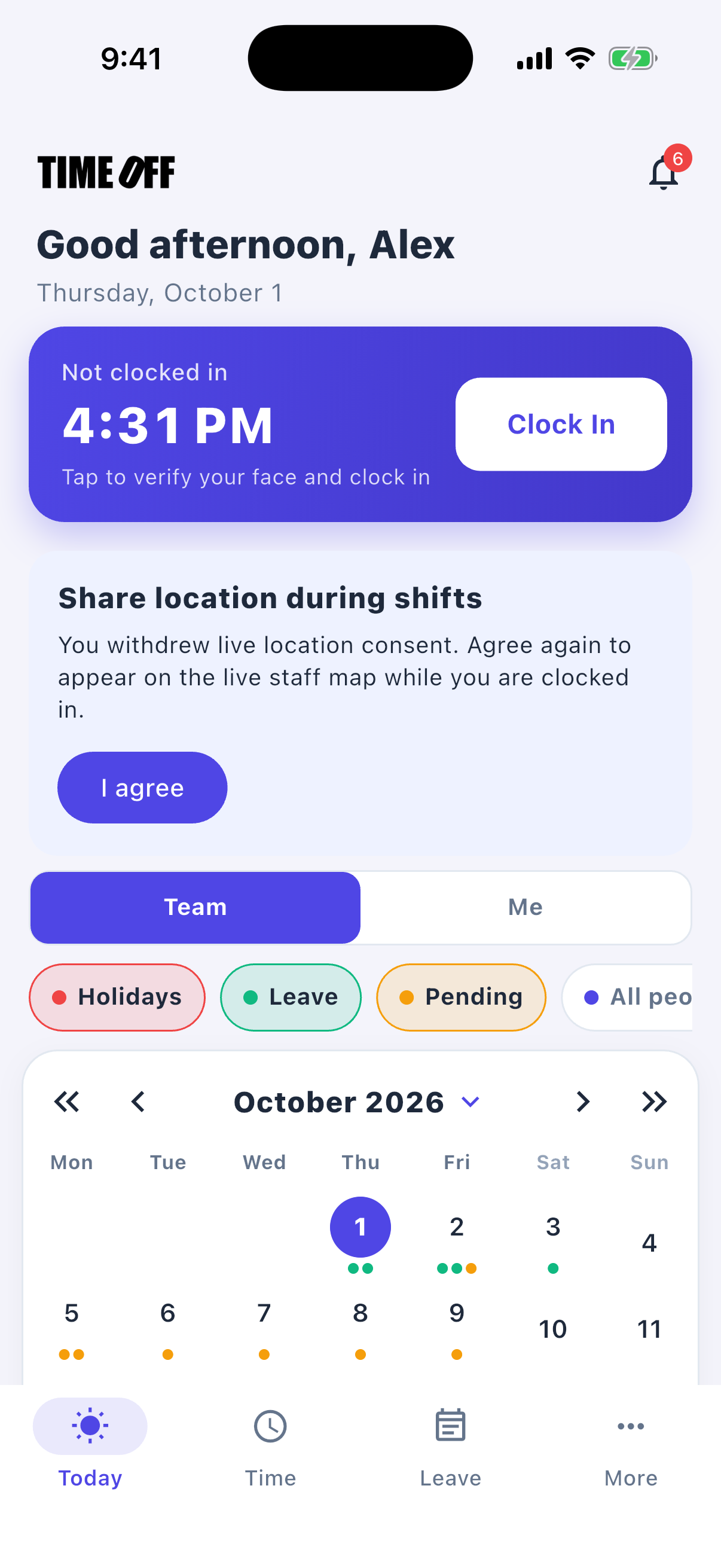
The day on a developer’s phone
Remote developers use the same account
Someone who works from home is still an employee, and their time off needs tracking like everyone else’s.
Remote developers request time off in the same company account as everyone else. Clocking in is optional.
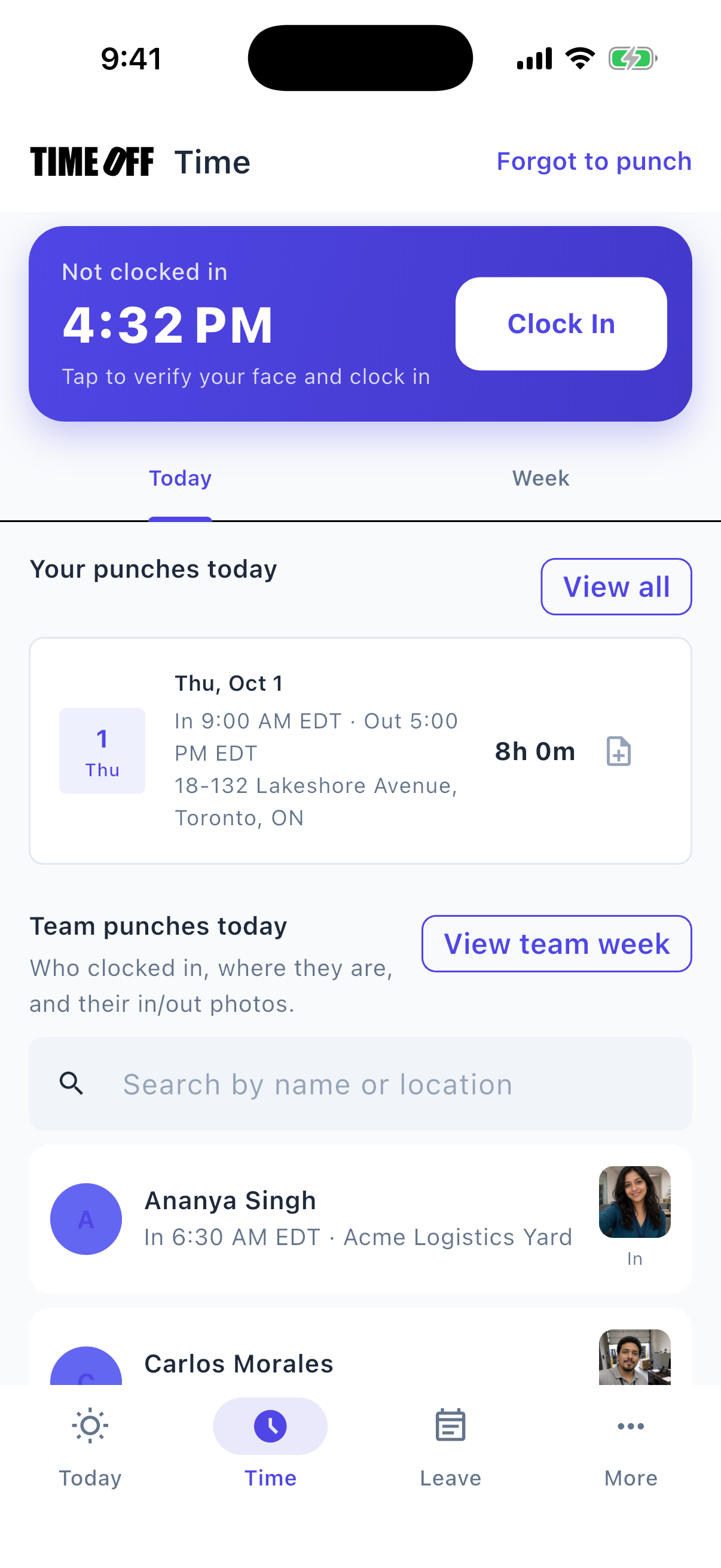
Clocking in from the phone
Hourly contractors can clock in
Hourly contractors can only be tracked here if you add them as employees in the app.
Once they are on your employee list, they can clock in and out. Someone who is not on the list is not tracked.
Approved hours, ready for payroll
TimeOff Manager tracks hours. It doesn’t pay anyone. At the end of the pay period, a manager reviews and approves the hours. Then you download them as an Excel or CSV file and send it to whoever runs payroll: your bookkeeper, your accountant, or your payroll software.
-
Hours are approved first
A manager checks the hours before they go anywhere, so payroll gets real numbers, not guesses from a group text.
-
Overtime is flagged
Extra hours show up on the timesheet, so you can see overtime before you pay it.
-
Excel or CSV
One download your bookkeeper or payroll software can open.
-
Payroll happens elsewhere
TimeOff Manager does not calculate pay, print checks, or file taxes.
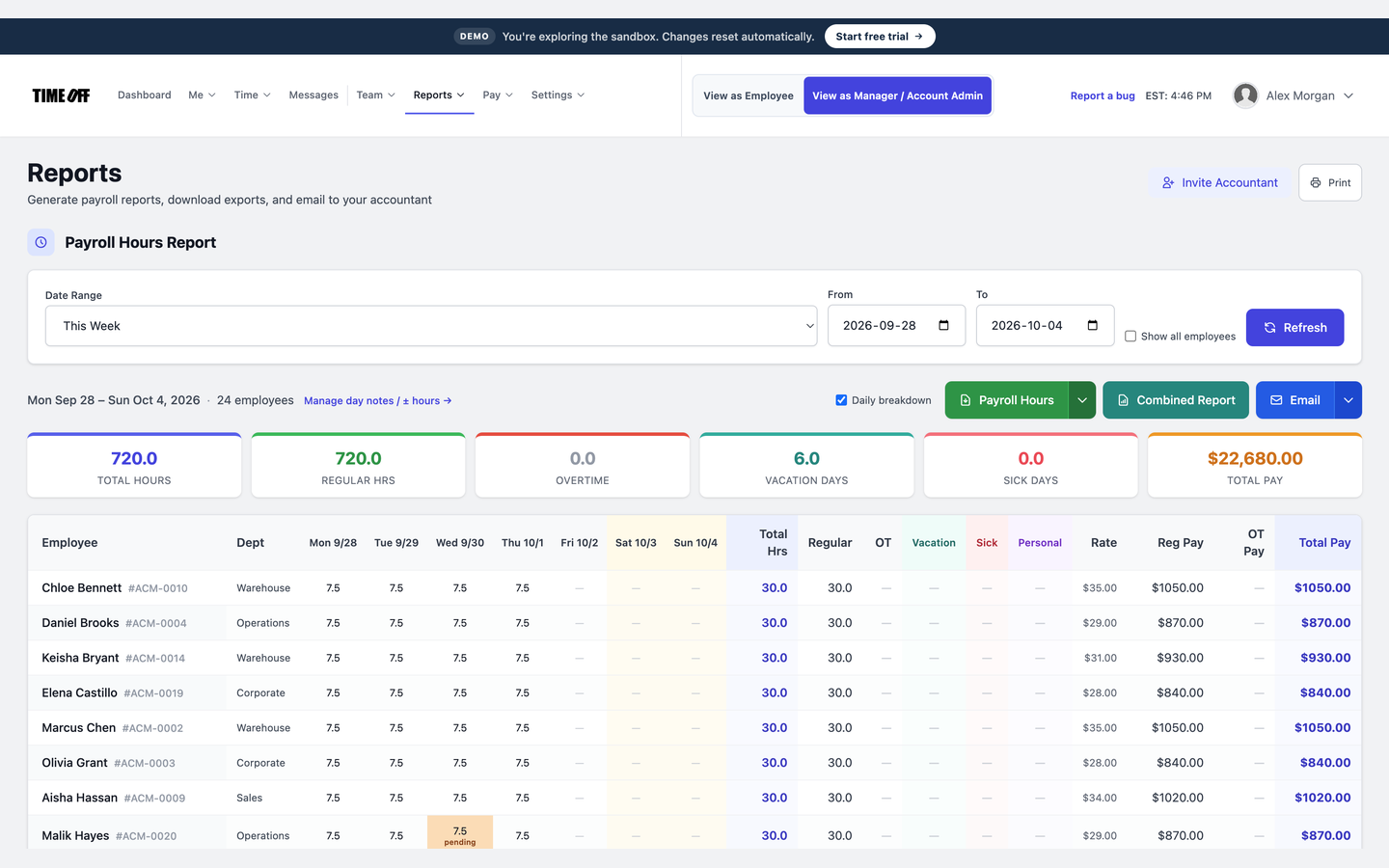
The hours report, ready to download
See it on the real product
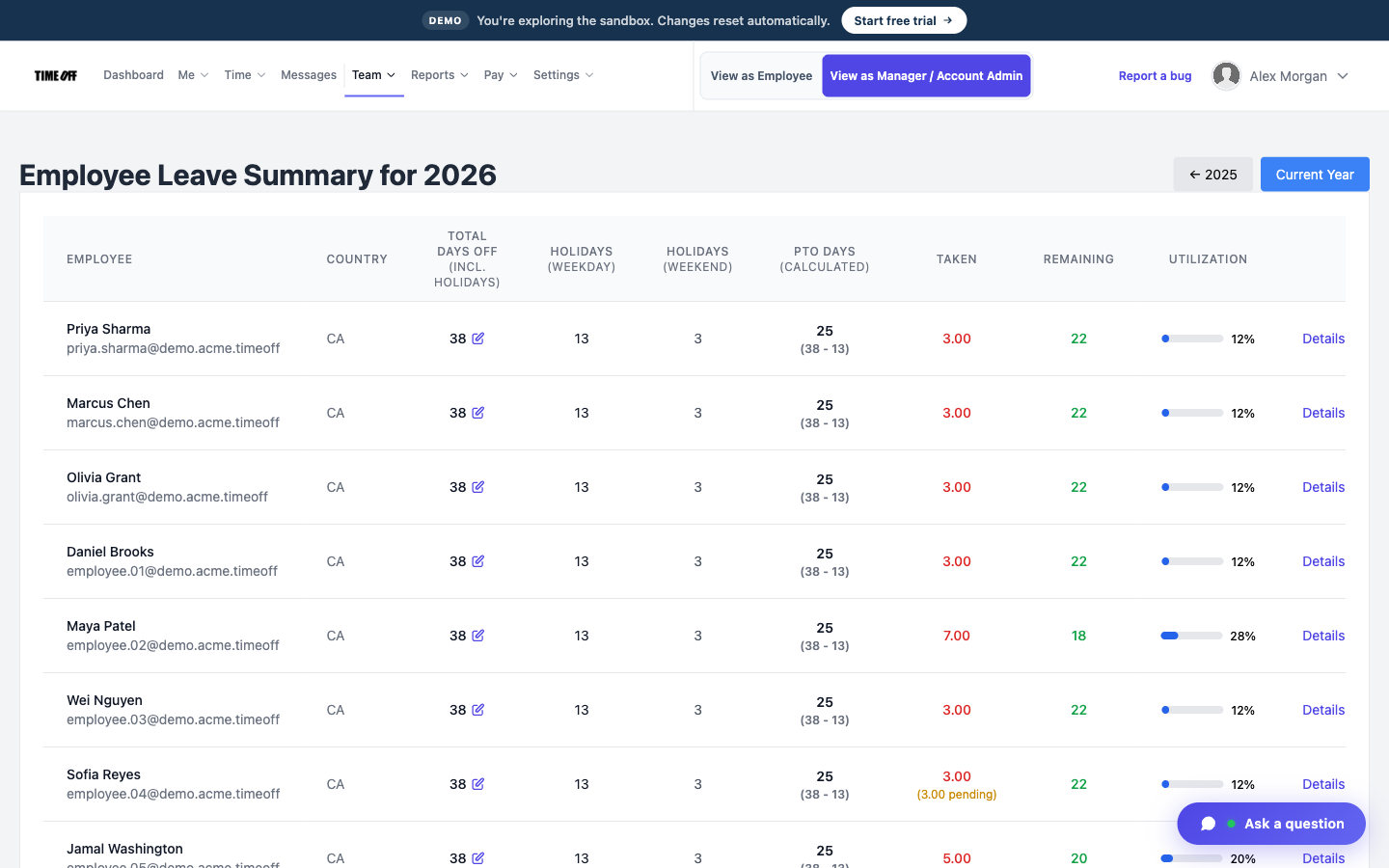
These are real TimeOff Manager screens. Open the live demo to click around them yourself.
A typical week
-
1
Someone asks for a week off
A developer requests the week in the app and sees how many days they have left.
-
2
The manager approves it
The decision happens in the approval list, not in a long chat thread.
-
3
The calendar updates
The rest of the team can see the days right away.
-
4
Hours go to payroll, if you track them
Salaried developers don’t need to clock in to take time off. Hourly people can still clock in, and you download their approved hours.
What it doesn’t do
TimeOff Manager is not a project tool. It does not track tickets, code repositories, or standups. It tracks time off, hours if you want them, and a download of those hours for payroll.
Also see time tracking software, TimeOff Kiosk, PTO software, and pricing.
Approved time off can sync to Google Calendar and Microsoft Outlook. Approved hours can go to QuickBooks Online or FreshBooks.


You can also ask ChatGPT, Claude, or Cursor questions about your account, like who is out next week, through Model Context Protocol.

Simple pricing
From $15/mo billed annually. Starter $15/mo · Growth $25/mo · Scale $49.99/mo. Every plan includes time off, clock-in, GPS, a shared-tablet kiosk, mileage, and hour downloads.
Common questions from software teams
Do salaried people have to clock in?
No. They can use TimeOff Manager just for time off. Clocking in is there if you also want to track hours.
Can we set our own leave policy?
Yes. You set the leave types and how days build up. TimeOff Manager does not assume one policy for you.
Does it work for a remote team?
Yes. Requests and the team calendar work the same whether people are in an office or at home.
How much does it cost?
From $15/mo billed annually after a 14-day trial. Starter is $15/mo for 1–20 people, Growth is $25/mo for 21–50, and Scale is $49.99/mo for larger teams.
Everyone can see who is out this week
From $15/mo billed annually after a 14-day trial. Starter $180/year (1–20 users), Growth $300/year (21–50), Scale $49.99/mo or $479.90/year (51–1,000).