PTO in Canada 2026: Vacation Minimums by Province & Vacation Pay
In Canada, PTO mostly means vacation. Here are the 2026 vacation minimums and vacation pay rates for every province and territory, the recent PEI change, and the carryover rules small teams miss.


Clear PTO policies help Canadian teams stay compliant and reduce leave surprises.
If you've searched "PTO in Canada," here's the short answer. In Canada, PTO usually means vacation: a legal minimum of paid time off that grows with years of service, paid out as a percentage of wages. It sits next to statutory holidays, not inside them. The catch is that each province sets its own numbers, and two of them changed the rules recently enough that a lot of online tables are now wrong.
This guide gives you the 2026 minimums for every province and territory, how vacation pay works, the carryover and payout rules that trip up small teams, and a simple way to track it all without a spreadsheet.
What PTO means in Canada
US companies use "PTO" as a bucket for vacation, sick days, and personal days. Canadian law doesn't use that word. Employment standards talk about three separate things:
- Vacation time: the paid weeks off an employee earns after each year of work.
- Vacation pay: the money for that time, usually a percentage of gross wages (4%, 6%, or more with tenure).
- Statutory (public) holidays: paid days like Canada Day and Labour Day. These are separate from vacation and never count against it.
Sick days and personal leave are another layer again, and they vary even more by province. So when someone on your team asks "how much PTO do I get," the honest answer is "your vacation minimum, plus the stat holidays where you work, plus whatever extra our policy gives you."
If you're comparing countries, our Canada vs US vacation days guide covers the averages and parental leave. This page is about the provincial rules themselves.
Vacation minimums by province and territory (2026)
Federally regulated workplaces (banks, airlines, telecom, interprovincial trucking) follow the Canada Labour Code. Everyone else follows the employment standards law of the province or territory where they work.
| Jurisdiction | Starting vacation | Next step up | Vacation pay |
|---|---|---|---|
| Federal (Canada Labour Code) | 2 weeks after 1 year | 3 weeks after 5 years, 4 weeks after 10 years | 4%, then 6%, then 8% |
| British Columbia | 2 weeks after 12 months | 3 weeks after 5 years | 4%, then 6% |
| Alberta | 2 weeks after 1 year | 3 weeks after 5 years | 4%, then 6% |
| Saskatchewan | 3 weeks after 1 year | 4 weeks after 10 years | 3/52 (about 5.77%), then 4/52 (about 7.69%) |
| Manitoba | 2 weeks after 1 year | 3 weeks after 5 years | 4%, then 6% |
| Ontario | 2 weeks after each 12-month year | 3 weeks after 5 years | 4%, then 6% |
| Quebec | 1 day per month in year one (max 2 weeks), then 2 weeks | 3 weeks after 3 years | 4%, then 6% |
| New Brunswick | 2 weeks after 1 year | 3 weeks after 8 years | 4%, then 6% |
| Nova Scotia | 2 weeks after 1 year | 3 weeks after 8 completed years | 4%, then 6% from the start of year 8 |
| Prince Edward Island | 2 weeks after 1 year | 3 weeks after more than 5 years (was 8) | 4%, then 6% |
| Newfoundland and Labrador | 2 weeks after 1 year | 3 weeks after 15 years | 4%, then 6% |
| Yukon | 2 weeks after each year | No automatic step up | 4% |
| Northwest Territories and Nunavut | 2 weeks after each year | 3 weeks starting in year 6 | 4%, then 6% after 5 years |
Three rows deserve a second look:
- Saskatchewan starts at three weeks. It's the most generous starting point in the country, and vacation pay is a fraction (3/52), not a round 6%.
- Quebec steps up at three years, not five. If you copied an Ontario policy into a Montreal office, you're short a week for anyone past year three.
- PEI moved its third week from eight years to five. The province's Employment Standards Act changes are recent, so plenty of older guides still say eight.
Nova Scotia has its own quirk: the 6% vacation pay starts a year before the third week does. These are minimums. Your contract or collective agreement can always give more.
How vacation pay actually works
Vacation pay is a percentage of what the employee earned in the vacation year. In Ontario, for example, it's at least 4% of gross wages (not counting vacation pay itself) for employees under five years, and at least 6% after that. Saskatchewan includes overtime and public holiday pay in the wages it counts.
When you pay it is the other decision:
- Before or during the vacation. This is the default in most provinces.
- On every pay cheque. Ontario allows it if the employee agrees in writing or electronically, and the amount shows separately on the pay stub. Nova Scotia lets you build it into the hourly rate as long as that rate still clears minimum wage plus the vacation percentage.
The most common small-business mistake isn't the math. It's missing the anniversary when the rate jumps from 4% to 6%. Nobody notices until an employee does.
Carryover, deadlines, and payout
Canadian rules lean toward "take it," not "bank it." A few examples:
- Ontario: vacation must be taken within 10 months after the vacation year ends, and the employer is responsible for making sure it's scheduled.
- Nova Scotia: vacation must be given within 10 months after the 12-month earning period.
- Prince Edward Island: within four months after the 12-month period, unless you and the employee agree on a different time.
- Saskatchewan: if vacation isn't taken, the vacation pay must be paid within 11 months of the employee becoming entitled to it.
When someone leaves, earned vacation pay they haven't received is owed in their final pay. That's true whether they quit, were laid off, or were let go. The deadline for that final payment varies by province.
If your policy is more generous than the law, the extra days are yours to manage. You can cap carryover on the extra or set a use-it-or-lose-it date, as long as the statutory minimum is still taken or paid on time.
Statutory holidays are separate
Federally regulated employees get 10 general holidays with pay. Provinces set their own lists, and they don't all match. Family Day, Civic Holiday, Remembrance Day, and the National Day for Truth and Reconciliation are the usual places they differ. A stat holiday that falls during someone's vacation generally doesn't use up a vacation day, though the exact rule depends on the province.
Planning next year already? Our 2027 company holiday calendar for the US and Canada lists the dates by province.
What good looks like for a small Canadian team
- Every employee's vacation minimum is based on where they work, not where head office is.
- Each person's tenure date is on file, so the 3-week or 6% step up isn't a surprise.
- Employees can see their own balance and request time without emailing HR.
- Managers approve from one queue and can see who else is off that week.
- Stat holidays for each location show on the same calendar as approved leave.
- Payroll gets a clean file of leave taken, so vacation pay matches the days.
How TimeOff Manager handles it
Here's how the pieces map to the product, using the real screens.
For admins setting policy:
- When you add someone with the employee wizard, the Compliance step recommends vacation, sick, and personal-day amounts from the provincial minimums for that hire's location. You accept or override them, and you stay responsible for the final policy. Our statutory PTO wizard walkthrough shows it step by step.
- Vacation and sick are built in. If your handbook has more (bereavement, unpaid leave, a floating day), add them in custom leave types.
- In Company Settings, the Time Off tab sets hours per workday and whether staff book in days, hours, or both.
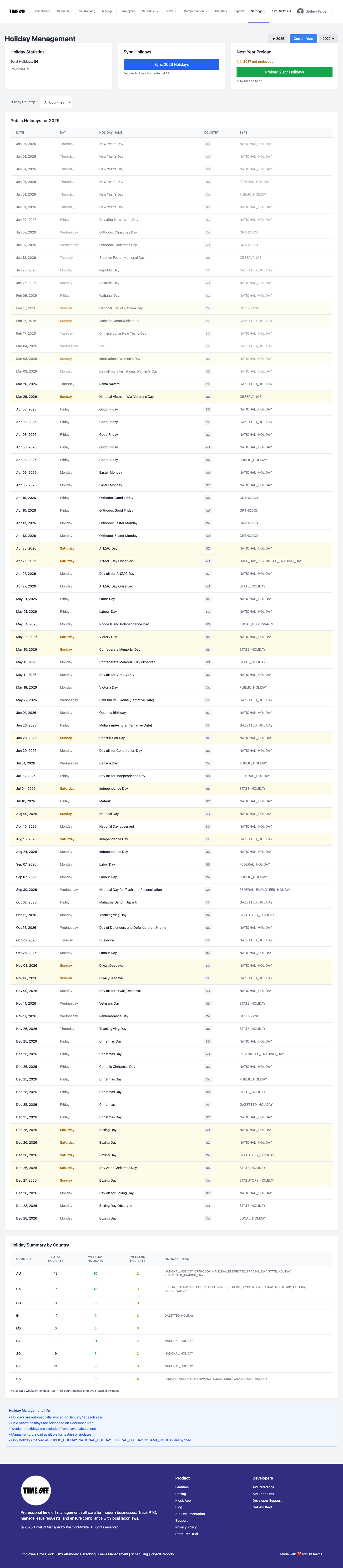
- Holiday management syncs public holidays by country, so the team calendar shows real days off.
For employees: they request vacation from My leave requests, pick the leave type, and track status (pending, approved, rejected, cancelled) in one list.
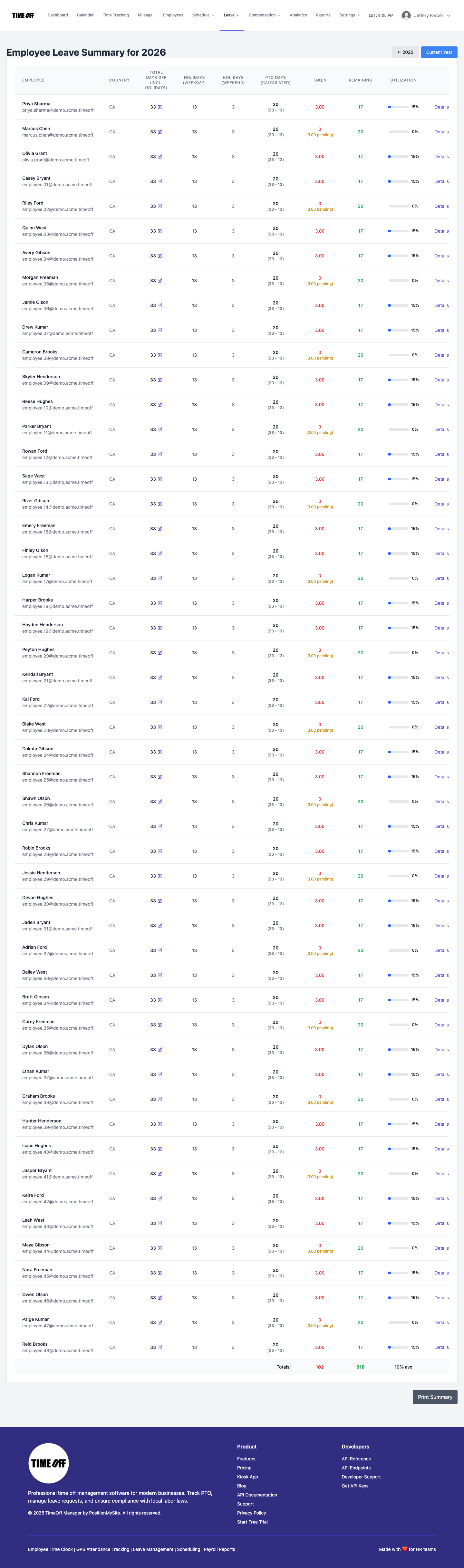
For managers and HR: requests land in the approvals queue (see managing leave requests). The Employee Leave Summary shows each person's country, PTO, days taken, days remaining, and utilization for the year. That's where you'll spot the person sitting on a full balance in month eleven, before the deadline passes.
For payroll: Reports builds a Payroll Hours Report with leave days, which you can download as Excel or CSV or email straight to your accountant.
A 30-minute setup checklist
- List every province or territory where someone actually works, including remote staff.
- Check each one against the table above and your contracts. Write down the minimum and any extra you offer.
- Record each employee's start date so tenure thresholds are visible.
- Set up leave types to match your handbook, and keep statutory vacation separate from extra company days.
- Sync stat holidays for each location.
- Put a recurring reminder on the calendar a few months before each vacation-year deadline to check who still has time left.
- Decide when you pay vacation pay (before the vacation or on every cheque) and get any written agreements on file.
Compliance note
This is not legal advice. Thresholds and the wages that count toward vacation pay change, and some jobs are exempt or follow special rules. Check your province's employment standards office or the territorial fact sheet before you finalize a policy, and talk to an employment lawyer if you're unsure.
Try it
See how vacation balances, approvals, and stat holidays fit together on our PTO software page. When you're ready, start a 14-day free trial or open the live demo first.
FAQ
What does PTO mean in Canada?
In Canada, PTO usually refers to paid vacation: the minimum weeks off an employee earns each year, paid as a percentage of wages. Statutory holidays and sick leave are separate entitlements under provincial law.
How much paid vacation do Canadians get by law?
Most employees get at least 2 weeks after their first year, rising to 3 weeks with tenure. Saskatchewan starts at 3 weeks. The step up comes after 3 years in Quebec, 5 years in most provinces and in PEI, 8 years in New Brunswick and Nova Scotia, and 15 years in Newfoundland and Labrador.
Is vacation pay always 4% in Canada?
No. 4% is the usual starting rate for 2 weeks. It rises to 6% for 3 weeks, 8% for 4 weeks in federally regulated workplaces after 10 years, and Saskatchewan uses 3/52 (about 5.77%) and 4/52 (about 7.69%).
Do statutory holidays count as vacation days?
No. Statutory holidays are a separate paid entitlement. A stat holiday during someone's vacation generally doesn't use up a vacation day, but check your province's exact rule.
Can employees carry over unused vacation in Canada?
Only for a limited time. For example, Ontario requires vacation to be taken within 10 months after the vacation year ends, and PEI within four months unless both sides agree otherwise. Earned vacation pay must be paid out when employment ends.
Does TimeOff Manager set provincial vacation minimums for me?
It recommends them. The employee wizard suggests vacation, sick, and personal-day amounts from the provincial minimums for each hire's location. You can accept or change them, and you stay responsible for the final policy.